


3.6kV Vacuum Contactors
Home Products Vacuum Contactor3.6kV Vacuum Contactors
3.6kV Vacuum Contactors
The core selling points of the 3.6kV vacuum contactor lie in its high capacity, long service life, and highly reliable performance. Combined with its compact, enclosed robust structure and user-friendly design that facilitates installation and maintenance, it makes an ideal choice for controlling high-power equipment in demanding industrial environments.
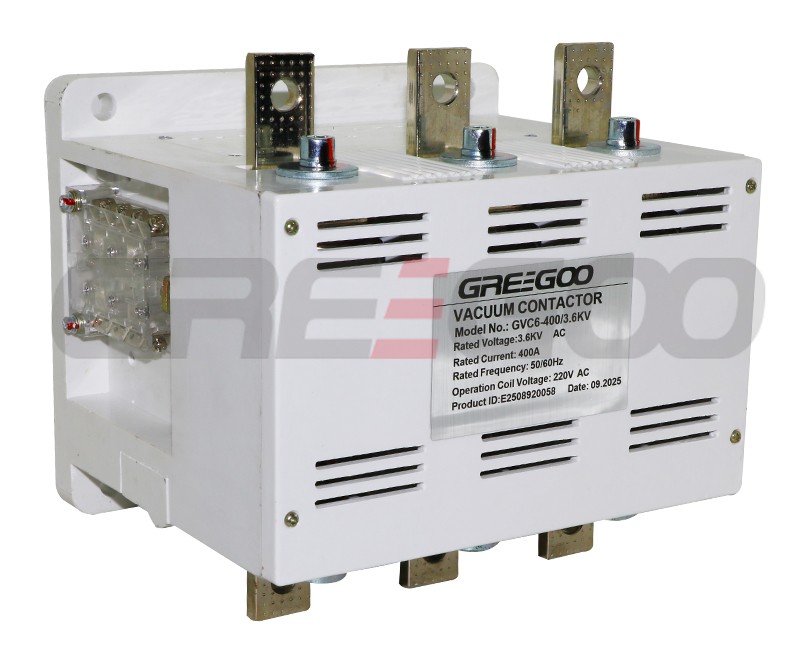
3.6KV Vacuum Contactor
400A and 630A vacuum contactors, enclosed type.

3.3KV 3.6KV vacuum contactor EVC9-3.6/D400-4T
3.6kv, 400A open frame vacuum starter, 3.3kv Vacuum Contactor starter, 3.3kv vacuum contactor

4160V 400Hz 160A Vacuum Contactor
400Hz 4160V 160A Vacuum Contactor, high-voltage rail applications

3.6KV 630A to 2500A Fast Vacuum Contactors (bypass switch)
Making or breaking time is less than 5ms vacuum contactor as by-pass switch.

CNF-400A/1.14KV Fast Vacuum Contactor
400A 1140V bypass switch
- Low Voltage (380V/690V): Local urban roads for light traffic.
- 3.6kV: A dedicated high-capacity highway for heavy-duty industrial loads.
- High Voltage (10kV ): Cross-country arteries for massive energy transmission.
- Reduced Cable Costs: Raising the voltage to 3.6kV reduces current to approximately one-fifth of a 690V system. This allows for thinner, lighter, and more cost-effective cabling.
- Compact Equipment: Handling massive currents at low voltage requires bulky, expensive circuit breakers. 3.6kV allows for smaller, more efficient switching equipment.
- Minimized Energy Loss: Since power loss is proportional to the square of the current (P=I2R), 3.6kV significantly reduces heat waste during transmission.
- Mature Insulation: Unlike systems above 10kV, 3.6kV does not require complex gas insulation (like SF6), relying instead on mature, cost-effective air or solid insulation.
- Optimal Footprint: 3.6kV switchgear, such as vacuum contactors, is simpler and significantly cheaper than higher-voltage alternatives while being robust enough for heavy industrial use.
- Clear Classification: Voltages above 1kV are strictly classified as Medium Voltage. 3.6kV systems are built to these higher safety and insulation standards, providing the durability needed for harsh environments.
- Global Interchangeability: As a standard IEC voltage, 3.6kV ensures global compatibility, promoting competitive pricing and easier maintenance across different manufacturers.
- Modern Mining: Powering high-capacity equipment (pumps, conveyors, shearers) in confined underground spaces with minimal cabling.
- Heavy Industrial Hubs: Ideal for rolling mills, cement kilns, and large-scale compressors.
- Infrastructure & Ports: Essential for powering large gantry cranes and massive water treatment pumping stations.
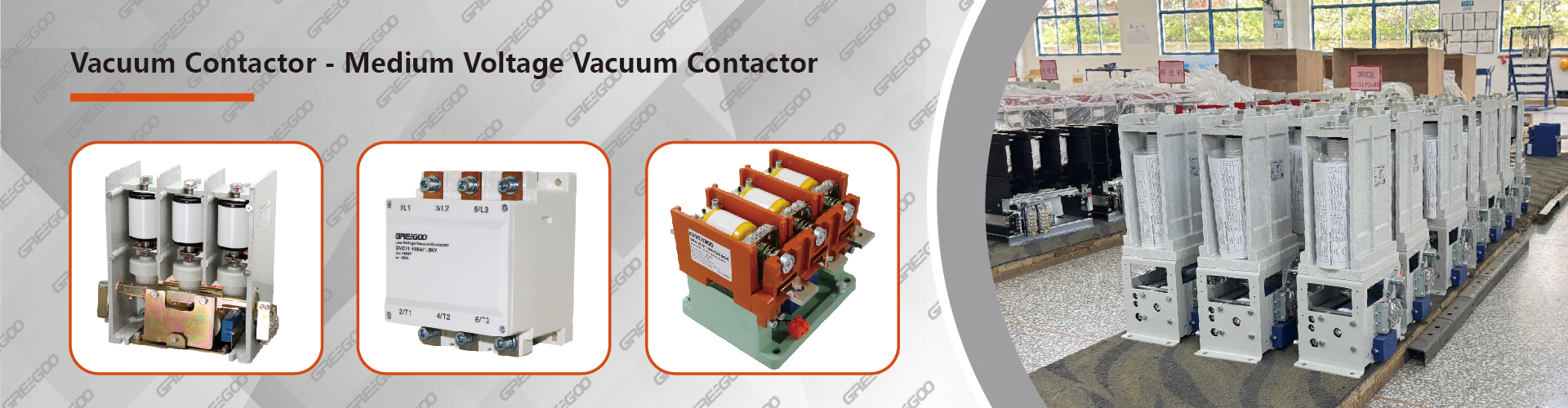
Fast vacuum contactors are widely used as bypass switches due to their quick operation (<5 milliseconds), high reliability, and high current tolerance. They ensure continuous power supply during main circuit faults or maintenance, making them ideal for scenarios requiring rapid response and efficient power management.
The GHFVC-160A/5kV and GVC5-160A/1.14KV vacuum contactor series vacuum contactors differ significantly. GHFVC, rated at 5kV and 400Hz, is tailored for rail transit with robust environmental resilience (-35°C to 55°C, vibration, tilt ±30°), a permanent magnet latching (≤600W), and 300,000 mechanical cycles. GVC5, rated at 1.14kV and 50/60Hz, serves industrial motor control with an electrical latch (≤800W), 100,000–300,000 cycles. GHFVC excels in high-voltage rail applications, while GVC5 is cost-effective for general industrial use, with lower voltage and simpler design.
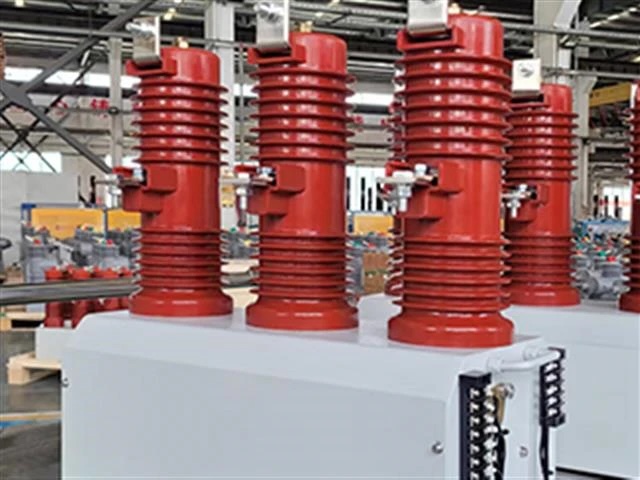
12KV Vacuum Contactor with Vacuum Circuit Breaker Integrated - Frequent Switching under Higher Breaking Capacity 31.5kA
12KV 630A to 1250A 31.5KA Vacuum Contactor + Vacuum Circuit Breaker, frequently switching under high breaking capacity
Read More
Vacuum Contactor vs. AC Contactor, What is the Differences?
Vacuum contactors provide superior durability and low maintenance for high-voltage systems, while AC contactors are cost-effective and versatile for lower-voltage needs.
Read More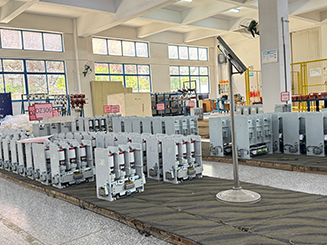
How to Use a Vacuum Contactor? A Comprehensive Guide on Vacuum Contactors
Understanding well about Vacuum Contactor, A Comprehensive Guide
Read More

We value your privacy
We use cookies to enhance your browsing experience, serve personalized ads or content, and analyze our traffic. By clicking "Accept All", you consent to our use of cookies.
