


Stud Semiconductors vs. Capsule Semiconductors
Stud and capsule semiconductors are high-power, industrial-grade components designed for heavy-duty applications, featuring robust packaging for superior thermal management and electrical performance. They are widely used in rectifiers, inverters, motor drives, welding equipment, and power supplies.
Types of Devices: These include rectifier diodes, fast recovery diodes, phase control thyristors (SCRs), Fast thyristor.
Design & Structure:
Stud Type: Features a threaded bolt for easy, secure installation onto heatsinks, providing excellent thermal stability.
Capsule (Hockey PUK) Type: Designed for double-sided cooling, offering maximum power density and thermal efficiency for high-current applications.
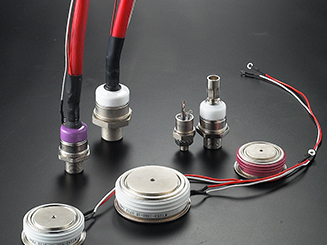
Capsule and stud semicondcutors
Stud Semiconductors vs. Capsule Semiconductors
In the field of industrial power semiconductors, stud-type and capsule-type are two mainstream packaging forms widely used for diodes and thyristors. Their main differences stem from their physical structures, which directly determine their installation methods, heat dissipation characteristics, and applicable scenarios.
Structural Characteristics
Stud-type: Uses a stud as the anode and adopts a single-sided heat dissipation design. It can be directly fastened to a heat sink via the stud, achieving both mechanical fixation and electrical connection in a compact structure.
Capsule-type: Requires press-fitting equipment to be secured between two heat sinks, relying on clamping force to ensure stable contact. It supports double-sided heat dissipation.
Core Advantages
Stud-type: Simple installation and maintenance, no need for specialized press-fitting tools, cost-effective, and offers outstanding reliability in low- to medium-power applications.
Capsule-type: Double-sided heat dissipation design provides higher heat dissipation efficiency, enabling higher voltage and current handling capabilities. It offers excellent power density and mechanical pressure resistance, ensuring stronger stability in high-power operating conditions.
Typical Application Scenarios
Stud-type: Commonly used in medium-power to low-power applications such as household appliance power control, small industrial power supplies, and automotive auxiliary circuits.
Capsule-type: Widely applied in high-power and high-reliability fields such as high-voltage direct current (HVDC) transmission, industrial inverters, metallurgical arc furnaces, and large-scale energy storage systems.
Fundamental Reasons
Stud-type: Oriented towards "convenient assembly and cost optimization," making it suitable for general-purpose medium- to low-power requirements.
Capsule-type: Focused on "efficient heat dissipation and high power handling," meeting the stability demands of high-power scenarios.
Conclusion
For medium-power to low-power applications where assembly convenience is prioritized, the stud-type is the preferred choice. For high-power, high heat dissipation scenarios with stringent stability requirements, the capsule-type offers greater advantages. Greegoo provides a complete product line for both packaging forms, aiming to deliver targeted core component support for industrial needs at different stages.
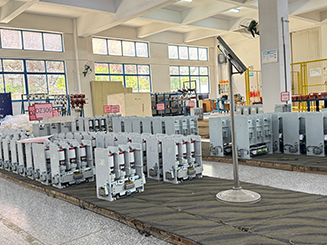
How to Use a Vacuum Contactor? A Comprehensive Guide on Vacuum Contactors
Understanding well about Vacuum Contactor, A Comprehensive Guide
Read More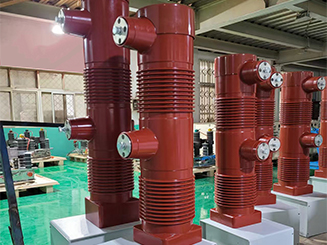
Performance Advantages of Embedded Pole Technology Vacuum Contactor
Performance Advantages of Greegoo's Embedded Pole Technology Vacuum Contactors
Read More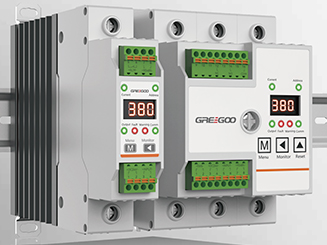
Exploring the Smartguard Solid State Relay: A Game-Changer for Industrial Automation
Is the Intelligent SSR Right for You? Diagnostics, RS485, Modbus communication, Intelligent detection SSR, LED display.
Read More
Ultra-fast switching - 5ms opening or closing time - vacuum contactors and vacuum circuit breakers
Greegoo can support customized parameters for specific needs of high speed vacuum contactors and vacuum circuit breakers.
Read More

We value your privacy
We use cookies to enhance your browsing experience, serve personalized ads or content, and analyze our traffic. By clicking "Accept All", you consent to our use of cookies.
